Materials
The material is the product.
Everything we make starts with full-grain, vegetable-tanned cowhide. This page is an honest account of what that means — what it is, how it ages, and what to expect.
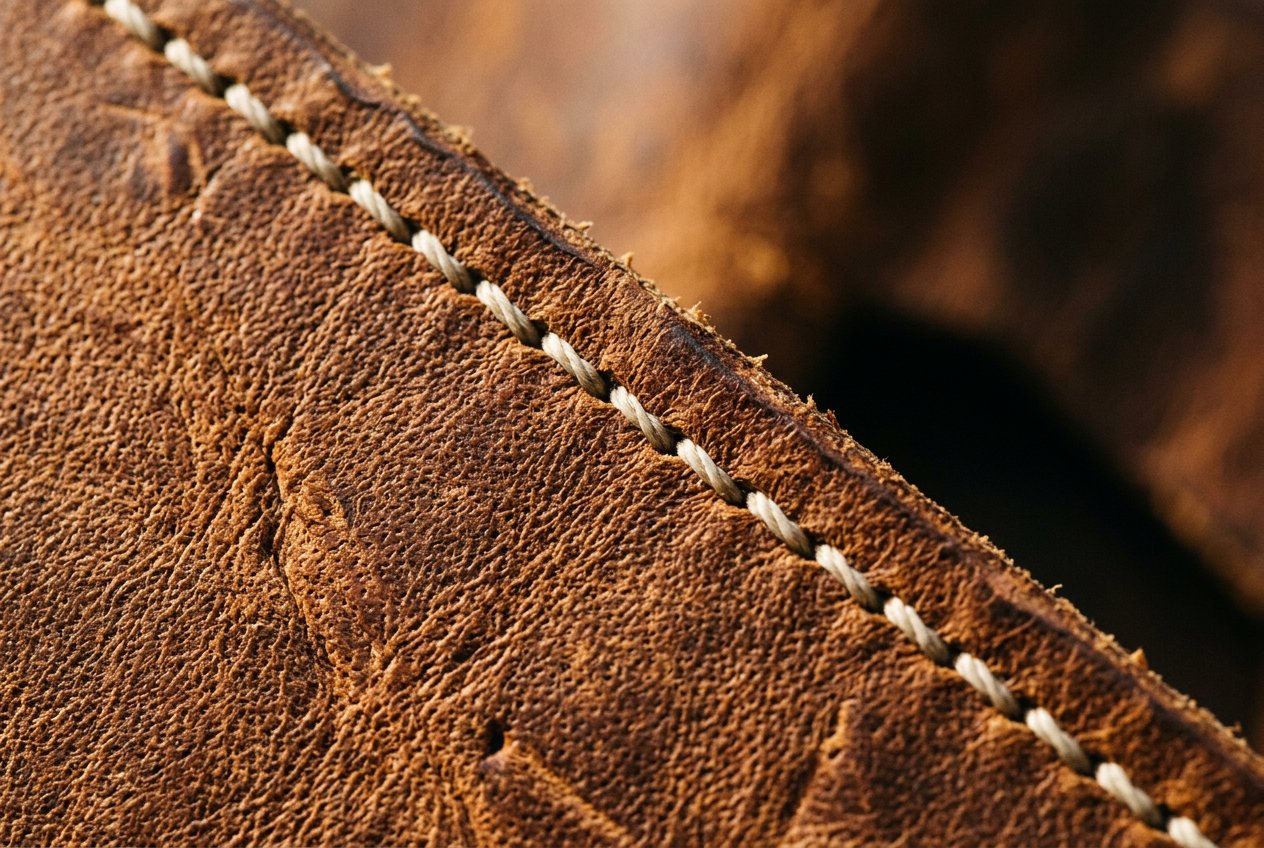
Full-grain
The top layer of the hide, left intact with its natural grain and pores. Strongest, most characterful — and never perfectly uniform, because real hide isn't.
Vegetable-tanned
Tanned with natural plant tannins rather than chromium. It's firmer to start with and develops the deepest patina over time.
Grain
Every hide carries the marks of the animal's life — pores, growth lines, small scars. We keep them. They're the material's signature, not a flaw.
Finish
We finish lightly, so the leather stays breathable and absorbs oils from your hands. That's what allows the patina to build.
Honest labelling
We tell you exactly what you're buying.
Every product page separates the outer material from the components — lining, hardware and thread — so a piece is never described as “100% leather” unless every part of it actually is.
We don't claim our leather is “ethically sourced”, “sustainable” or “eco-friendly” — those words mean specific, verifiable things, and we only use them once we can prove them. What we can say: the hide is full-grain cowhide, vegetable-tanned, worked by hand in Tanzania.
If a product's leather is sourced from a specific region, we'll only state that once it's verified. Otherwise we simply say what it is: full-grain cowhide.
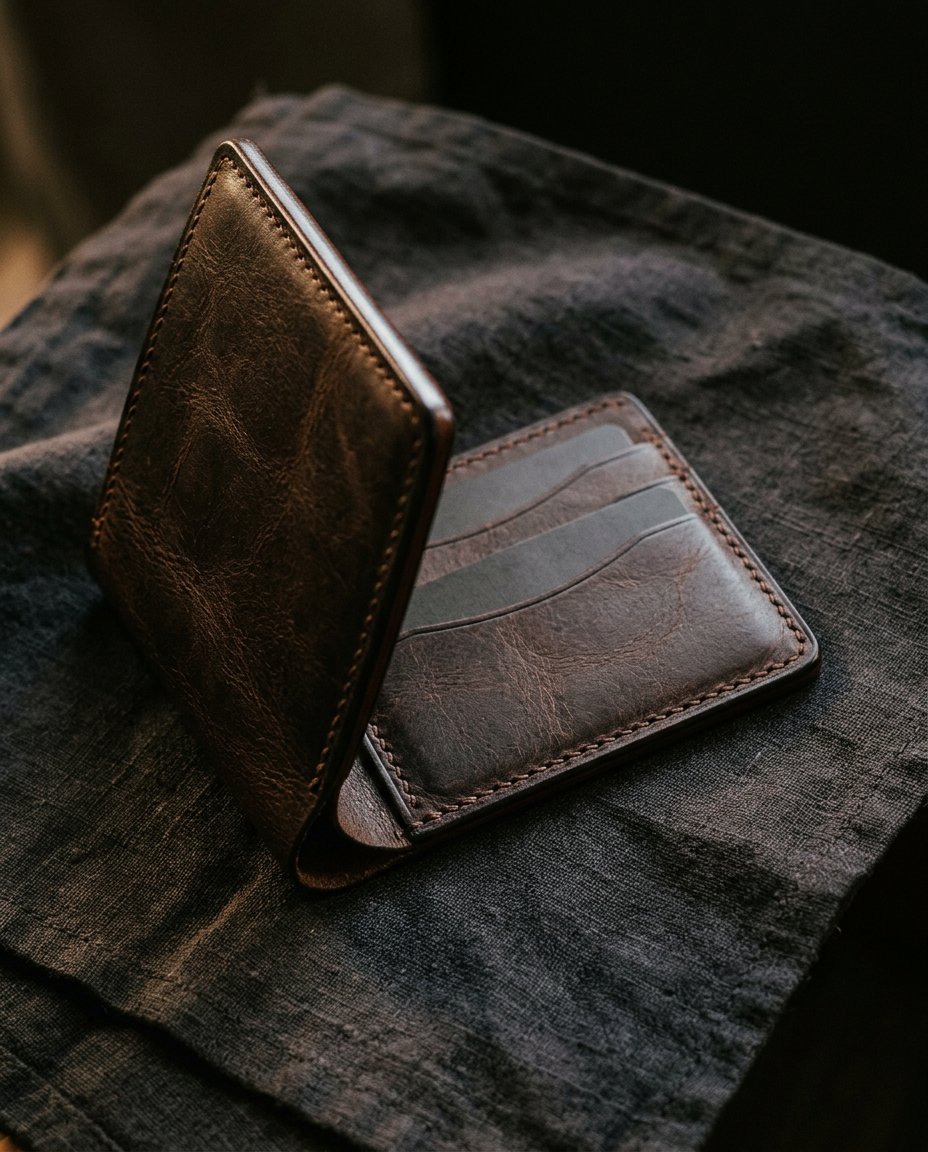
Ageing & care
It will change. That's the point.
Vegetable-tanned leather darkens with light, absorbs the oils of your hands, and develops a patina unique to how you use it. Two identical wallets, carried by two different people, will look different within months.
Care is simple: wipe with a dry cloth, condition with a neutral balm twice a year, and dry wet leather slowly away from heat.